Industry
Mining Wastewater Treatment
Acid mine drainage, selenium removal, and heavy metals treatment for Canadian and US mining operations.
🤖 AI Overview
Mining wastewater contains heavy metals, acidity, selenium, and flotation reagents that require specialized treatment beyond conventional lime precipitation. BioTerraVa's mineral-based advanced oxidation systems achieve >95% metals removal and >94% organic destruction while recovering nutrients as slow-release fertilizer.
Industry Challenges
Mining Effluent Challenges
Mining operations generate diverse wastewater streams: acid mine drainage (AMD) with pH < 3 and dissolved metals, process water with flotation reagents and cyanide, and tailings pond water with suspended solids and selenium. Each stream requires a tailored treatment approach.
- Acid mine drainage with extreme acidity (pH 2-4) and dissolved iron, aluminum, manganese
- Selenium and arsenic oxyanions that pass through conventional precipitation
- Flotation reagents (xanthates, cyanide) toxic to aquatic life
- High TSS from crushing, grinding, and tailings
- Variable flow rates tied to seasonal precipitation and production cycles
BioTerraVa Solutions
Mining Wastewater Solutions
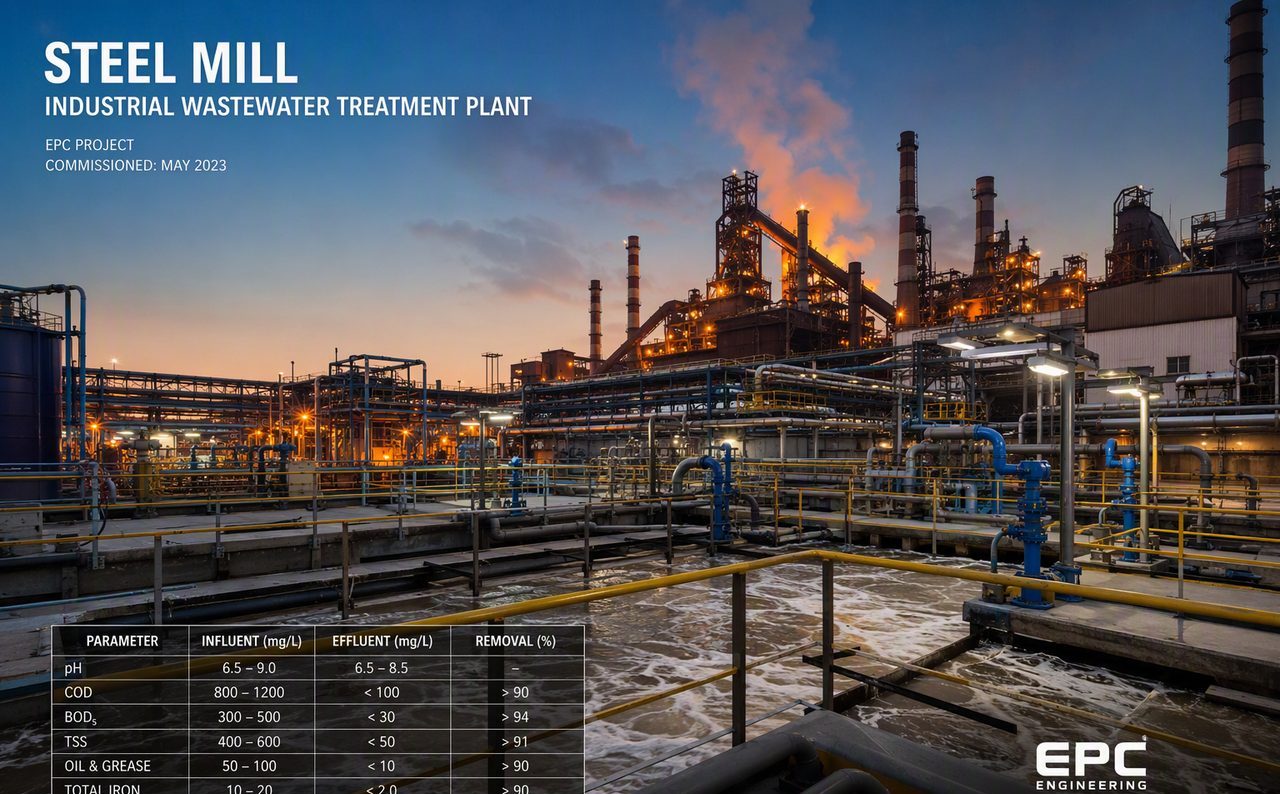
BioTerraVa's mining treatment approach combines passive and active treatment: mineral-based neutralization for AMD, advanced oxidation for organics destruction, and specialized media for selenium and arsenic capture. Our systems operate reliably in remote, cold-climate locations with minimal operator attention.
- Mineral-based neutralization with stable pH buffering (no over-shoot)
- Advanced oxidation for xanthate and cyanide mineralization (>94% destruction)
- Iron-oxide media for arsenic and selenium oxyanion capture
- Struvite recovery from blasting residue ammonia
- Remote monitoring and automation for low-staff operation
Compliance
Mining Compliance in Canada & USA
Mining discharge is regulated under the Canadian Metal Mining Effluent Regulations (MMER) and the US EPA NPDES program. Key parameters include: pH 6-9.5, total suspended solids < 15 mg/L, and site-specific metals limits. Emerging regulations target selenium (<0.01 mg/L) and ammonia.
- Canadian Metal Mining Effluent Regulations (MMER/SOR/2002-222)
- US EPA NPDES permits with site-specific effluent limits
- Selenium regulations (< 0.01 mg/L in many jurisdictions)
- Fisheries Act prohibitions on deleterious substances
- Provincial/State water quality standards for receiving waters
Case Study
Gold Mine Achieves Selenium Compliance Without RO
Problem: A gold mine in Northern Ontario was facing a $2M/year reverse osmosis upgrade to meet new selenium limits (<0.01 mg/L). RO was unattractive due to brine disposal costs and energy consumption.
Solution: BioTerraVa designed a two-stage mineral media system: iron-oxide composite for selenium oxyanion adsorption, followed by magnesium hydroxide precipitation for final polishing.
Results: Effluent selenium reduced from 0.08 mg/L to <0.005 mg/L (94% removal). Capital cost 60% lower than RO. Operating cost 75% lower. No brine waste stream. System operational in -40°C conditions.
Get a Free Assessment for Your Facility
Speak with a senior engineer about your specific effluent challenges.
Book a Free 30-Minute Consultation →Related Resources
FAQ
Frequently Asked Questions
How to remove selenium from mining wastewater?
Selenium removal from mining wastewater requires specialized treatment because selenium exists as oxyanions (selenate/selenite) that pass through conventional hydroxide precipitation. Effective methods include: iron-oxide adsorption, biological reduction, and zero-valent iron. BioTerraVa's mineral-based iron-oxide composite achieves >90% selenium removal at costs 60-75% lower than reverse osmosis.
What is acid mine drainage and how is it treated?
Acid mine drainage (AMD) forms when sulfide minerals (especially pyrite) in rock are exposed to air and water, producing sulfuric acid and dissolving heavy metals. AMD has pH typically 2-4 with high iron, aluminum, and manganese. Treatment involves neutralization (raising pH to 6-9), metals precipitation, and solids separation. Passive systems use limestone drains; active systems use lime or caustic soda with clarifiers.
How to treat mining wastewater in cold climates?
Cold-climate mining wastewater treatment requires technologies that function below 5°C where biological activity slows dramatically. Mineral-based chemical/physical processes (adsorption, precipitation, oxidation) maintain performance across temperature ranges. BioTerraVa designs systems with insulated enclosures, heated pipelines for critical components, and mineral media that work effectively from -40°C to +40°C without biological dependence.
Speak With a P.Eng. Who Has Done This for 36 Years
Domestic or industrial, municipal or Rural community — the first 30-minute consultation is free.
Book Your Free Consultation →