Government-Validated Technology
INNPT Proven Across Egypt — From the Kitchener Drainage Canal to Rural Governorates
Endorsed by the Minister of Environment, witnessed by governors of Fayoum, Demiatte and Sharqiyah, and validated by the Central Laboratory of the Ministry of Environmental Affairs. INNPT nanotechnology has treated over 700,000 m³/day of polluted wastewater across Egypt.
700K+
m³/day treated capacity across Egypt
90+
Mobile plants deployed for villages
90%
Treatment efficiency (Central Lab verified)
45%
Lower electricity vs. conventional plants
Mobile Deployment
INNPT Mobile Units in Action
Truck-mounted and containerized INNPT systems deployed across Egypt for emergency response, village sewage treatment, and industrial pilot studies.
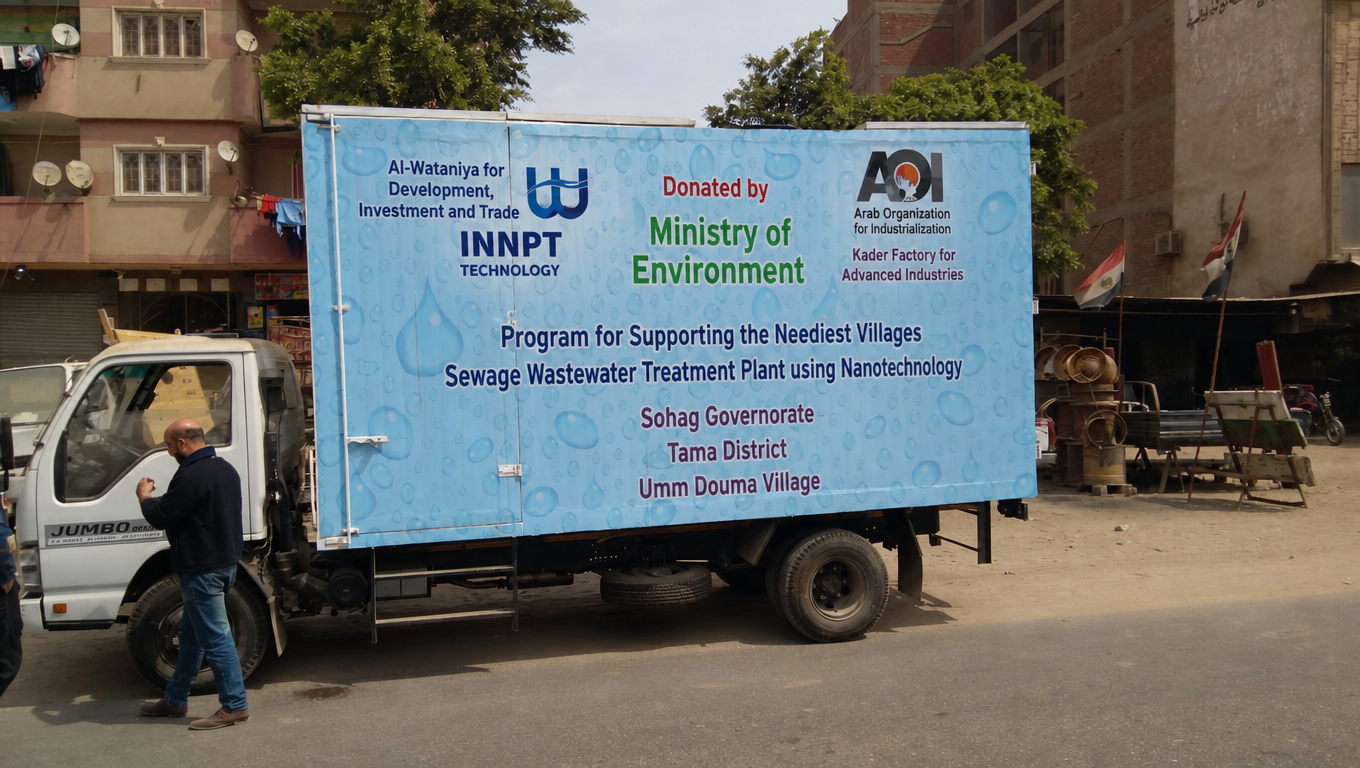
INNPT Mobile Treatment Unit on Truck
Fully equipped mobile sewage treatment plant mounted on standard truck chassis. Deployed to 90+ villages across Egypt's governorates. Capacity: 100 m³/day per unit. Setup time: under 30 minutes.
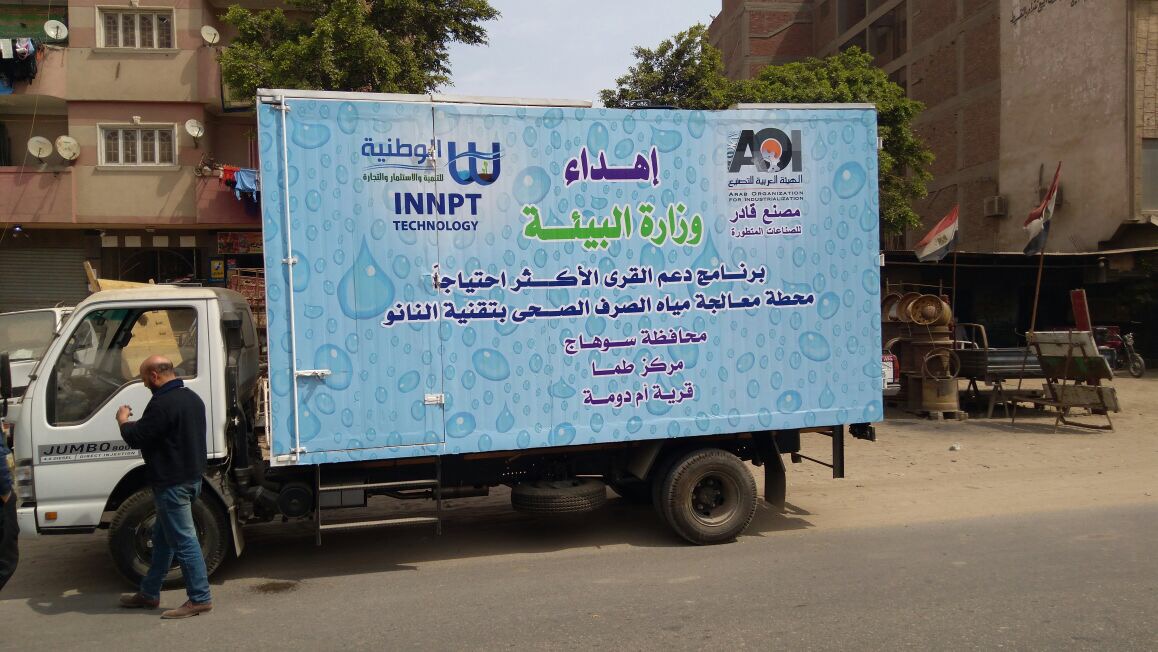
Field Installation
Mobile unit being positioned at a village sewage station for immediate deployment.
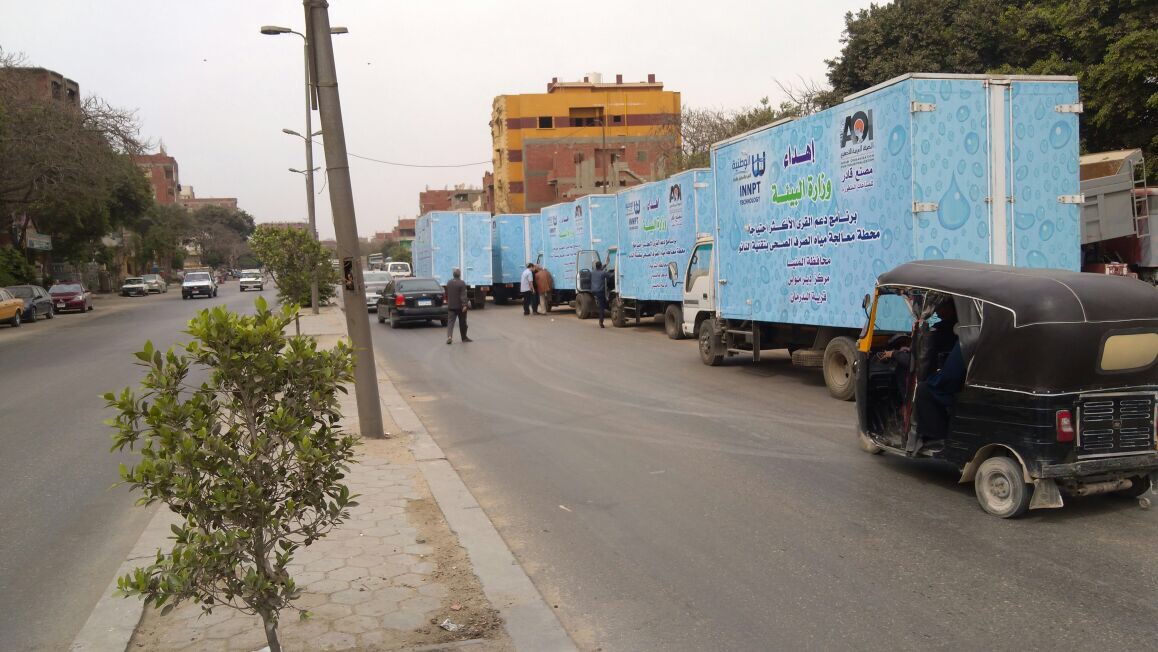
Operational Deployment
INNPT mobile system actively treating wastewater with nano-particle chemical process.
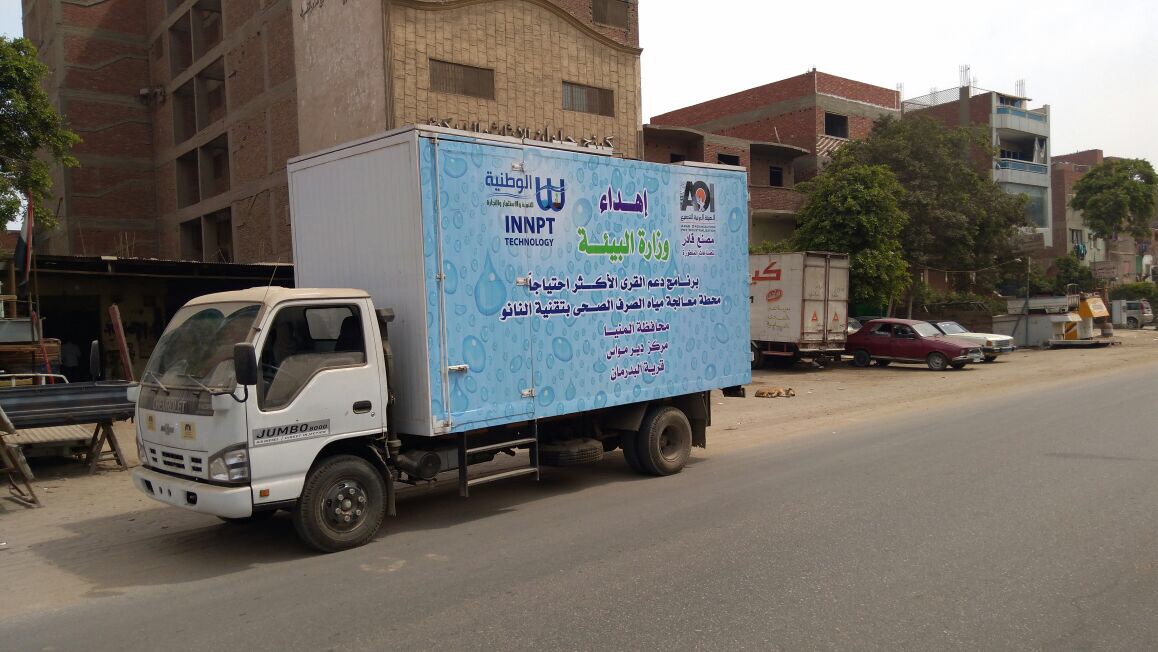
System Close-Up
Detailed view of the INNPT mobile treatment unit showing integrated process tanks and control systems.
Video Evidence
INNPT in Operation
INNPT Mobile Unit Demonstration
INNPT Field Operations
Official Recognition
Endorsed by Egyptian Governors and the Minister of Environment
From the first mobile unit trials in Fayoum (March 2015) to the handover of 10 mobile plants by the Minister of Environment (October 2016), INNPT has received direct support at the highest levels of Egyptian government.
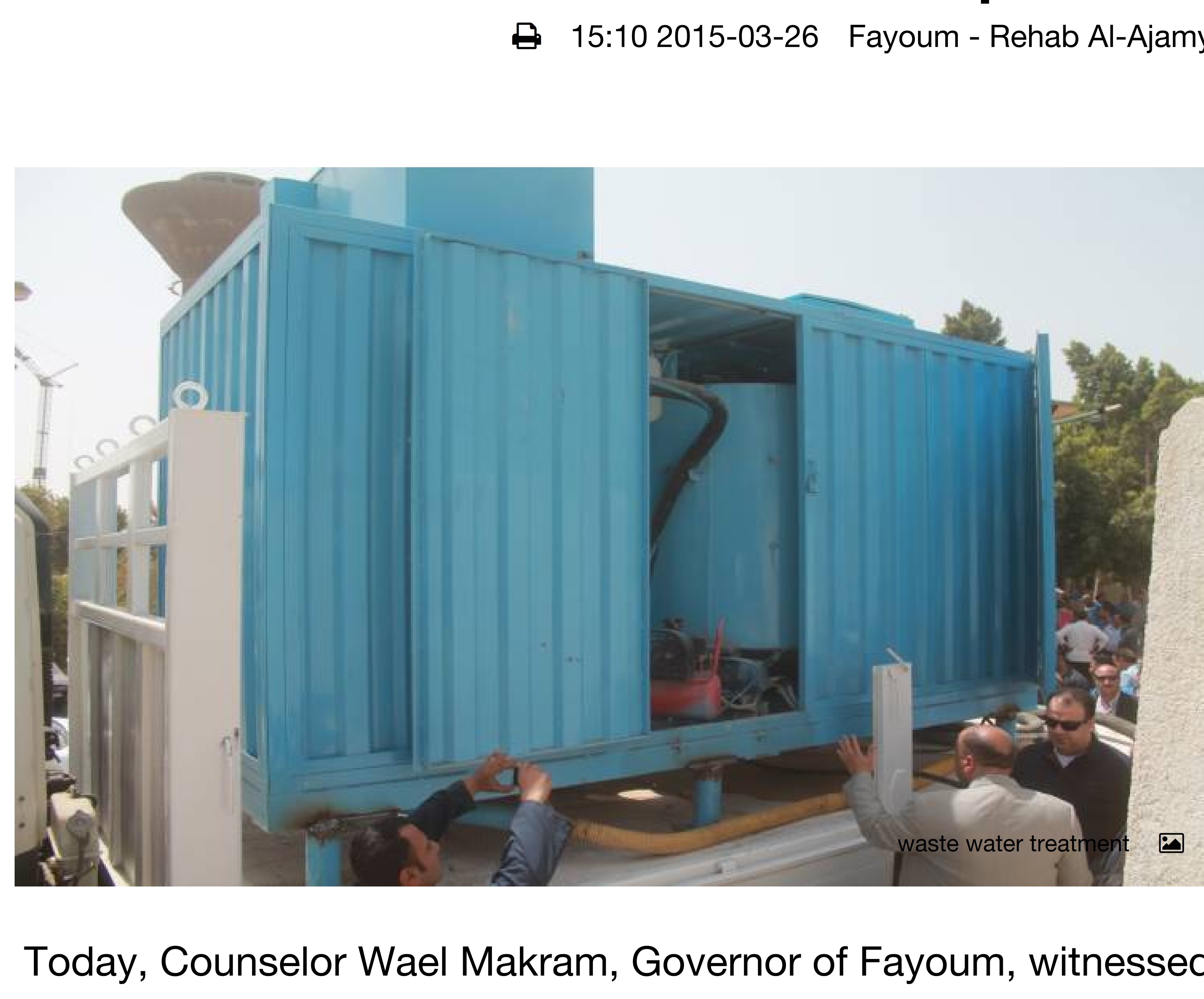
Counselor Wael Makram
Governor of Fayoum (2015). Witnessed the first INNPT mobile unit trial at Qahafa sewage station, praising the pioneering idea for solving sewage problems in deprived villages.
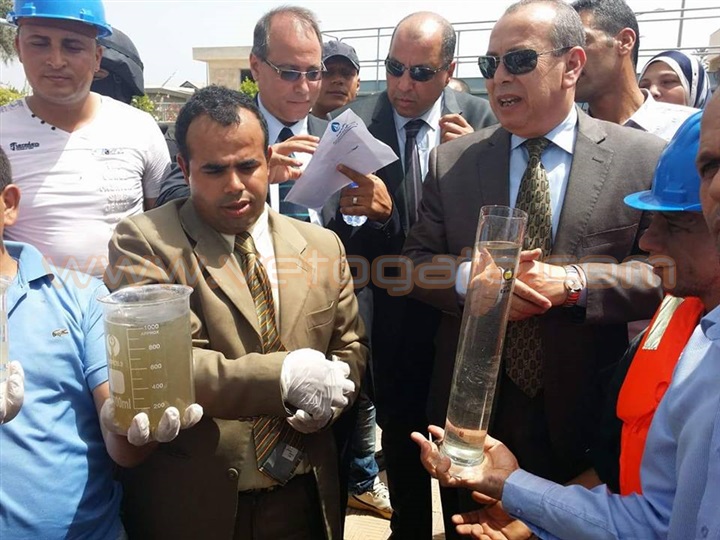
Dr. Mohamed Abd ElLattif
Governor of Demiatte (2015). Collaborated on INNPT deployment for rural water infrastructure across the governorate.
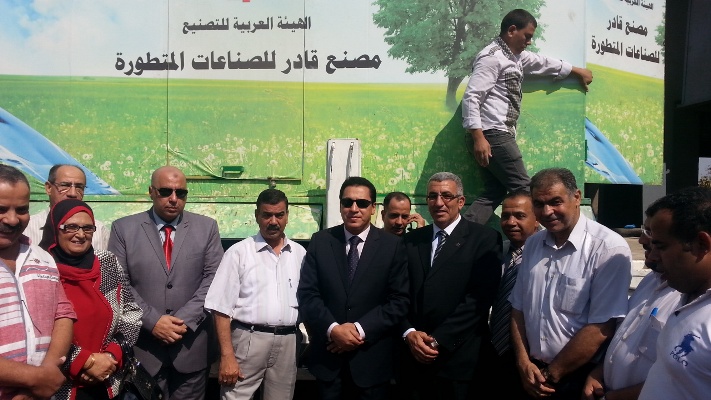
Dr. Reda Abd Elsalam
Governor of Sharqiyah (2015). Received 50 garbage containers and 10 mobile sewage treatment plants as part of the national plan to support neediest villages.
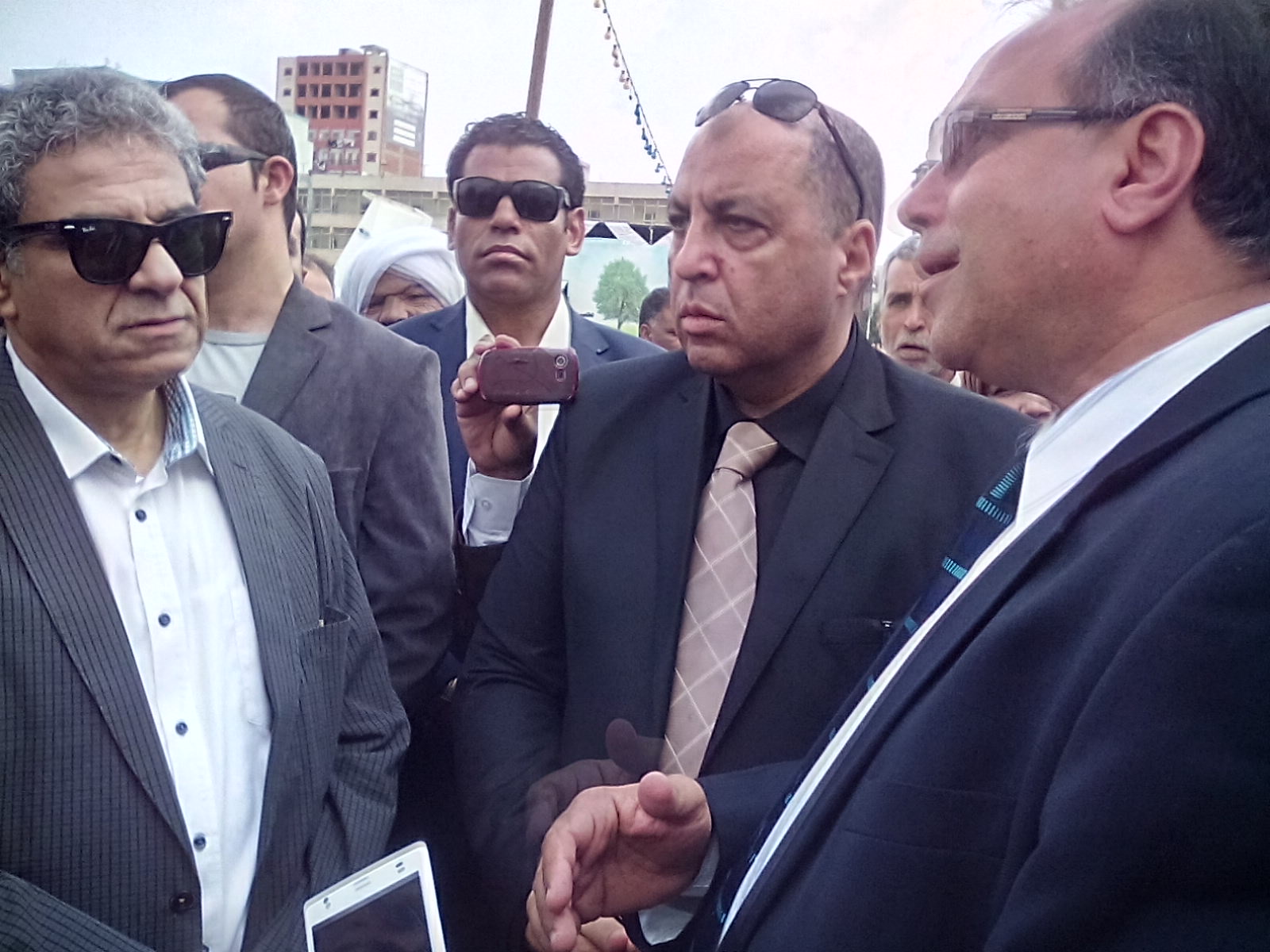
Dr. Khaled Fahmy
Minister of Environment (2016). Officially received 10 mobile INNPT sewage treatment plants from the Arab Organization for Industrialization (AOI) — Kader Factory, serving 61 villages and 21 centers.
Engineering Evidence
11 Proven Advantages of INNPT Over Conventional Treatment
Published by The Arabian Egypt (August 2015) and confirmed by Engineer Ibrahim Salman, Head of the Drainage Sector for the Central Delta Region, Ministry of Water Resources and Irrigation.
1. Speed of Deployment
Rehabilitation with INNPT: 1 year. Traditional methods: 2 years. Mobile units can be operational within weeks of delivery.
2. Lower Treatment Cost
1 EGP per m³ with INNPT nanotechnology vs. 2.5 EGP per m³ with traditional methods — a 60% cost reduction.
3. Higher Capacity Gain
Post-rehabilitation capacity reaches 400% of designed capacity with INNPT, vs. only 100% with conventional methods.
4. Triple-Stage Treatment
While traditional methods provide primary and secondary treatment only, INNPT delivers triple-stage treatment with superior water quality output.
5. >90% Treatment Efficiency
Central Laboratory of the Ministry of Environmental Affairs verified >90% removal of pathogens, bacteria, worms and their eggs.
6. 45% Lower Electricity
INNPT uses iron, aluminum, calcium and magnesium oxides from abundant Egyptian quarry sources — requiring up to 45% less electricity than conventional activated sludge.
7. Heavy Metals Removal
Proven removal of arsenic, cadmium, chromium, copper, nickel, zinc, lead and mercury — the 8 toxic heavy metals identified in the Kouchner Drain pollution study.
8. Pigment & Organic Load Reduction
The magnetic nanoparticle matrix removes color pigments and excess organic loads that conventional biological treatment cannot handle.
9. Local Material Sourcing
Uses shale, bentonite, kaolin and limestone readily available in Egyptian quarries — no imported chemicals or proprietary media dependencies.
10. Easy Integration
INNPT integrates directly with existing stations without full reconstruction — rehabilitate rather than replace, at a fraction of the capital cost.
11. Scalable from Village to Metropolis
From 100 m³/day mobile units for single villages (370,000 EGP each) to 700,000 m³/day at the Kitchener Drainage Canal — the same technology scales linearly.
Deployment Timeline
From First Trial to National Scale — The INNPT Story in Egypt
2015
First Mobile Unit Trial — Fayoum
Governor Wael Makram witnesses the first INNPT compact mobile sewage treatment unit at Qahafa station. Capacity: 100 m³/day. Cost: 370,000 EGP. Technology: INNPT nanoparticle chemical treatment.
📄 Source: Mobtada/Beginner News (March 26, 2015)
2015
11 Advantages Published — Ministry of Irrigation
Engineer Ibrahim Salman, Head of Drainage Sector for Central Delta, announces INNPT integration study. Plan: 760M EGP for station rehabilitation + 90M EGP for 90 mobile village plants + 36M EGP for 20 industrial mobile plants.
📄 Source: The Arabian Egypt / Al-Masry Al-Youm (August 18, 2015)
2015
Kafr El-Sheikh & Gharbia Pollution Crisis Identified
Field studies reveal 98 dangerous pollution hotspots on the Kouchner Bank. Water samples confirm 8 toxic heavy metals causing 27 human diseases. INNPT identified as the urgent solution.
📄 Source: El-Gornal News (August 15, 2015)
2016
Minister of Environment Receives 10 Mobile Plants
Dr. Khaled Fahmy officially receives 10 mobile INNPT sewage treatment plants from AOI — Kader Factory. Equipment for 61 villages and 21 centers across Sharkia, Giza, Beni Suef, Minya, Assiut and Sohag.
📄 Source: Youm7 / Al-Youm Al-Sabe' (October 4, 2016)
Deploy INNPT in Your Municipality or Industrial Facility
The same technology validated by Egyptian governors, the Minister of Environment, and the Central Laboratory is available for North American deployment under BioTerraVa's engineering license.
Request INNPT Technical Briefing →